Introduction to MEA System: Rethinking Economic Architecture
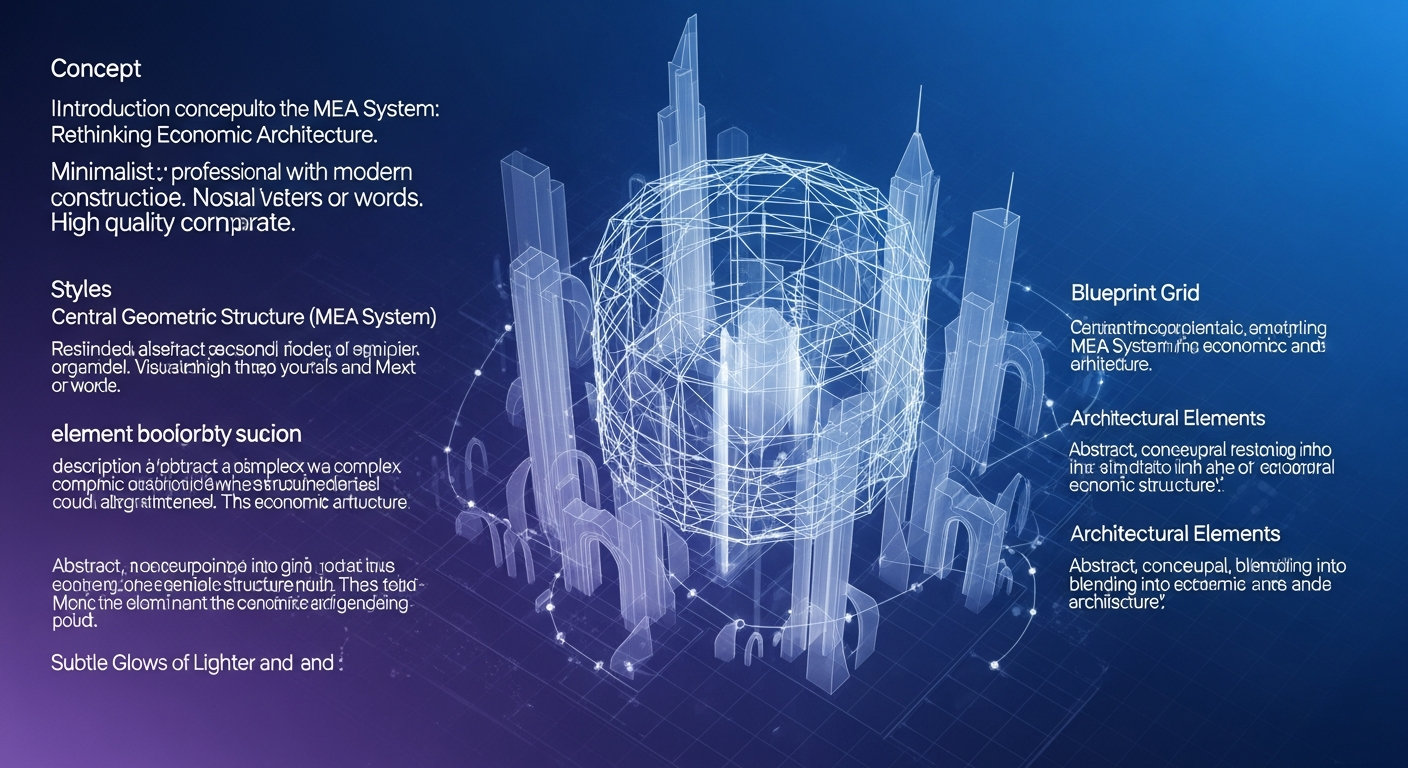
Modern Economic Architectural (MEA) represents a revolution in how we design and optimize economic systems. Born from deep reflection on the limitations of traditional models, this system proposes an innovative architecture based on fundamental principles.
The Pillars of MEA System
The system rests on several key concepts that form its architecture:
A.E.P - Primary Economic Architecture
A.E.P constitutes the foundation of every MEA economic system. It defines base structures, primary flows, and fundamental mechanisms governing value exchanges.
The main characteristics of A.E.P include:
- Modularity: Each component can be adapted without affecting the whole
- Scalability: The system grows naturally with demand
- Resilience: Disruptions are absorbed by compensation mechanisms
A.E.S - Secondary Economic Architecture
A.E.S enriches A.E.P by adding layers of sophistication and optimization. This is where advanced strategies and growth mechanisms are developed.
Why MEA?
In a world where traditional economic models show their limits, MEA offers:
- Conceptual Clarity - Clear and applicable principles
- Adaptability - A flexible structure for different contexts
- Measurability - Precise performance indicators
- Sustainability - An integrated long-term vision
Next Steps
In the following articles, we will explore each MEA system component in detail, with concrete application examples and implementation methodologies.
This article is the first in a series dedicated to a deep understanding of the Modern Economic Architectural system.